
The term “sovereign citizen” is being used more frequently across Australia, particularly by government departments and bureaucratic agencies. It is presented as a label for individuals who question authority, challenge administrative processes, or refuse to comply without first understanding the legal basis of what is being demanded of them.
But when examined closely, the first thing that becomes apparent is that this term has no foundation in Australian law. It does not appear in legislation, it is not defined in statute, and it carries no recognised legal meaning within the Australian Constitution or any Act of Parliament.
“Sovereign Citizen” is not law—it is a narrative and a blatant attempt to obfuscate and confuse the issue in contention.
Once that label is applied, the individual is no longer treated as someone asking legitimate questions, but as a problem to be managed.
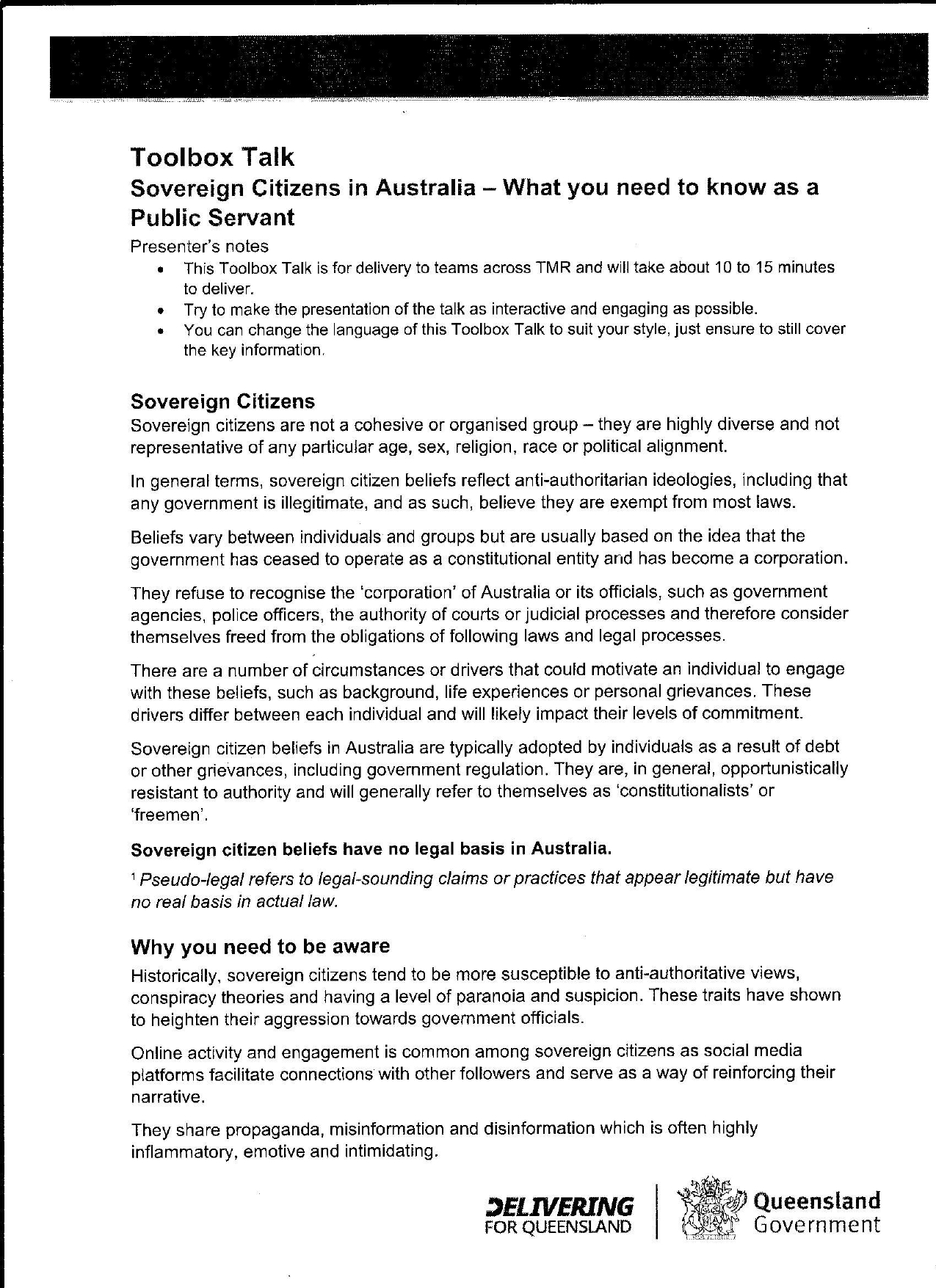
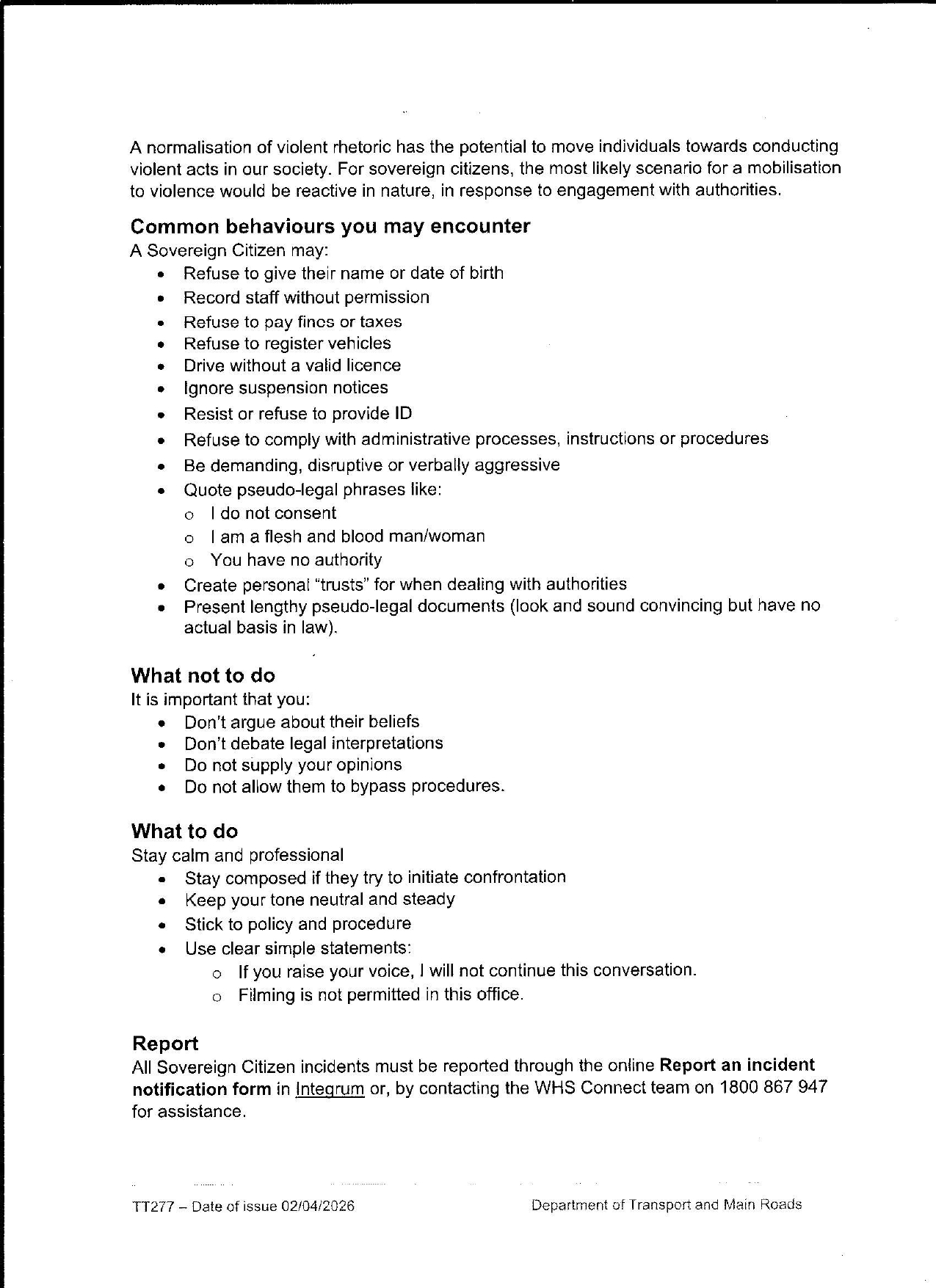
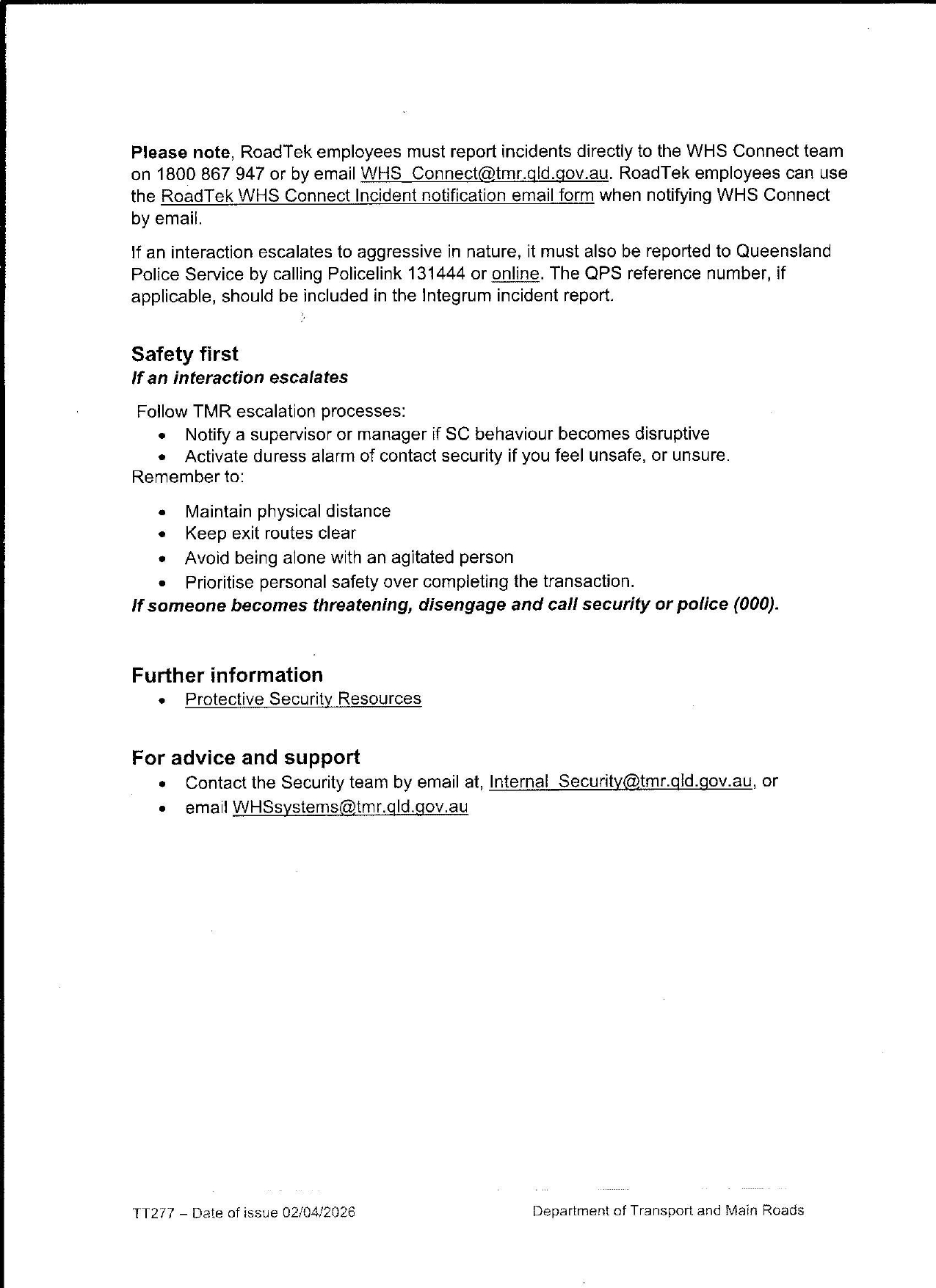
Government training materials make this position clear. Public servants are instructed not to debate, not to engage in legal discussion, and not to entertain challenges to authority.
Instead, they are told to follow procedure and enforce compliance. What is quietly ignored in this approach is a fundamental legal principle: procedure is not law. Every action taken by a government officer must ultimately be supported by legislation.
Click on each image to see what government employees are being told to do when anyone challenges their authority:
Click on an image to expand it to full size:
Authority in Australia does not exist by assumption; it must be granted, defined, and limited by law.
This principle sits at the very heart of the rule of law, a concept reinforced by the High Court in cases such as Australian Communist Party v Commonwealth (1951), where it was made clear that power alone does not create legality. Authority must be anchored in the Constitution and in valid legislation. It cannot simply be asserted and expected to be obeyed without question. Yet increasingly, individuals who ask for that legal foundation to be identified are met not with answers, but with resistance and personal slurs.
The irony in all of this is difficult to ignore. Those labelled as “sovereign citizens” are often accused of believing they are above the law. Yet in practice, it is frequently the system itself that behaves as though it is beyond scrutiny. Government officials derive their authority from specific legal sources, such as Section 61 of the Australian Constitution, which defines executive power, or from legislation enacted by Parliament. That authority is not unlimited. It is conditional, confined, and subject to challenge where it is exceeded or misapplied. When a person asks, “Under what authority?” they are not rejecting the law—they are asking for it to be properly identified.
In everyday situations, this tension becomes most visible. A fine is issued, often under legislation such as the State Penalties Enforcement Act 1999 (Qld). A licence is required under statutes like the Transport Operations (Road Use Management) Act 1995 (Qld). These laws exist, and they form part of the legal framework. But their existence does not remove the requirement for them to be applied correctly, within jurisdiction, and in accordance with proper legal process. The mere presence of legislation does not justify every action taken in its name.
Instead of addressing these distinctions, the response has been to dismiss challenges outright, often through the use of terms like “pseudo-legal.” This label is applied to arguments or language that fall outside accepted institutional norms, allowing them to be disregarded without examination.
However, Australian law does not operate on labels. It operates on principles, evidence, and legal reasoning. The High Court reaffirmed in Plaintiff S157/2002 v Commonwealth (2003) that government decisions remain subject to judicial review where legal error occurs.
In other words, authority is never absolute, and it is never beyond question.
At its core, this entire issue reflects a breakdown in communication and understanding. Individuals are asking fundamental questions:
- What is the source of the authority being exercised?
- Where is the obligation defined in law?
- Has that law been applied correctly in this instance?
These are not unreasonable questions. They are entirely consistent with the legal framework of Australia. The Acts Interpretation Act 1901 (Cth) itself exists to ensure that laws are interpreted and applied correctly, not simply enforced without thought.
Public officials, like all individuals, are bound by the law. They are not sovereign in any absolute sense; they are agents operating within a system that grants them specific, limited powers. Where those powers are exceeded, or where procedural fairness is denied, their actions may be invalid. The principles of natural justice—fair hearing and absence of bias—are not optional guidelines but established legal requirements that underpin administrative decision-making across Australia.
What is emerging, then, is not a problem of people rejecting the law, but a growing number of people questioning whether the law is being properly applied.
When those questions are met with dismissal instead of explanation, the result is predictable. Trust erodes. Frustration builds. Interactions escalate. And the label that started the process is then used to justify the outcome.
The continued use of the term “sovereign citizen” obscures this reality. It shifts the focus away from legal accountability and places it onto the individual, framing them as the issue rather than examining the system itself.
But in a country governed by law, authority must always be capable of being explained, justified, and, where necessary, challenged.
Because in the end, the principle is simple. No one is above the law—not the individual, and not the institutions that claim authority over them. And any system that relies on labels instead of lawful explanation risks undermining the very foundation upon which its authority depends.